
Pure Encapsulations Creatine Monohydrate
Pure Creatine Monohydrate for Strength, Power, Muscle Performance and Healthy Aging
Support strength, exercise performance and lean muscle with Pure Encapsulations Creatine, a clean, single-ingredient creatine monohydrate powder designed for active adults, athletes and anyone focused on maintaining physical performance over time.
Each serving provides 5 grams of creatine monohydrate, one of the most extensively studied ingredients in sports nutrition. Creatine helps replenish phosphocreatine within muscle tissue, supporting the rapid regeneration of ATP—the energy used during weightlifting, sprinting and other short bursts of intense physical activity.
When combined with consistent resistance training, adequate protein and proper recovery, creatine can support improvements in strength, power, workout capacity and lean body mass. It can also play an important role in healthy-aging routines focused on preserving muscle, mobility and physical independence.
Pure Encapsulations Creatine is unflavored and easy to mix into water, a protein shake, an electrolyte drink or another beverage of your choice.
Benefits of Pure Encapsulations Creatine
Creatine monohydrate supports:
Muscular strength and power
High-intensity exercise performance
Repeated bursts of speed and force
ATP regeneration and cellular energy
Workout capacity and training volume
Lean muscle development with resistance training
Recovery following strenuous exercise
Glycogen storage in muscle tissue
Maintenance of muscle function during healthy aging
Long-term physical performance and resilience
5 Grams of Creatine Monohydrate per Serving
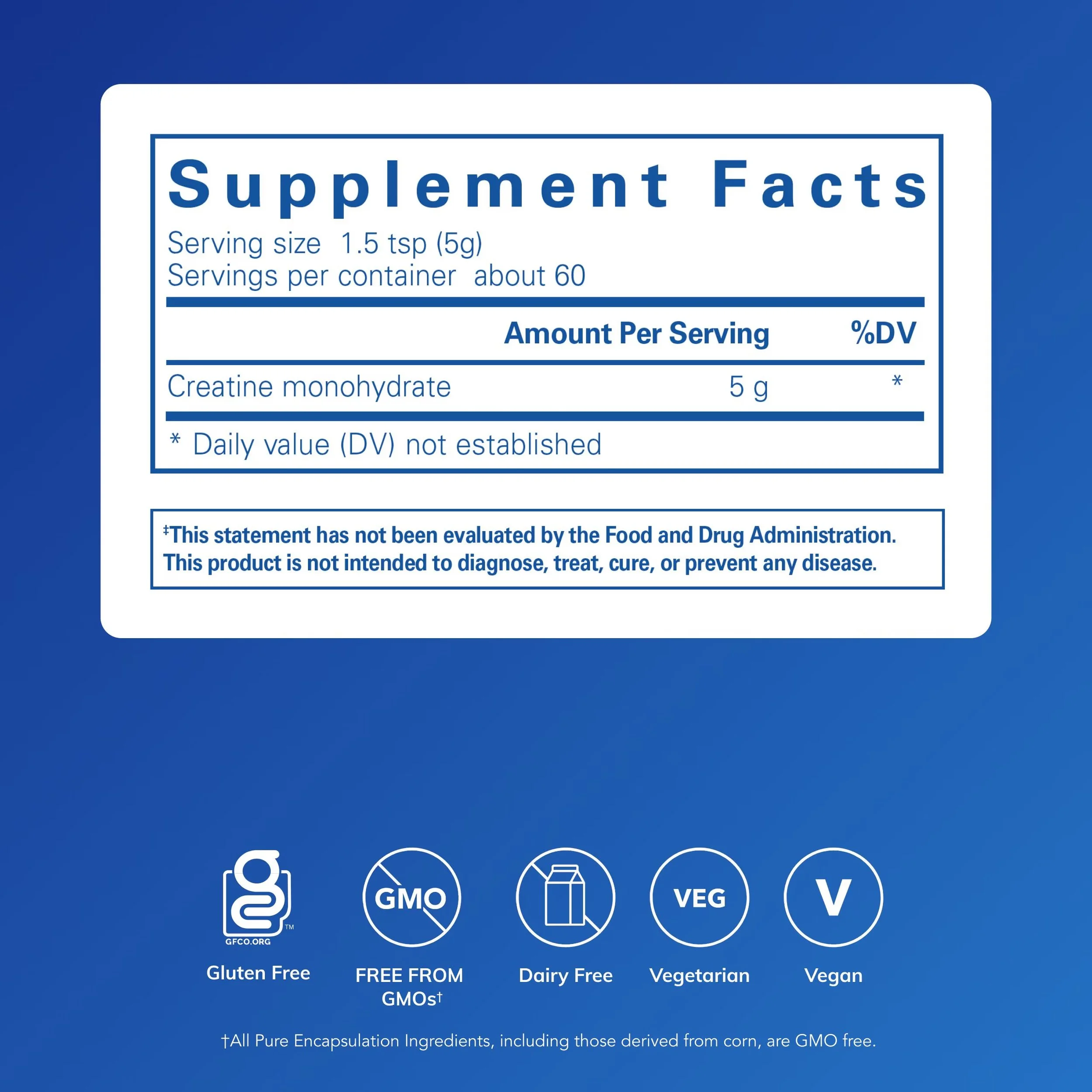
Each 1½-teaspoon serving delivers 5 grams of pure creatine monohydrate, providing a full daily maintenance serving without proprietary blends, flavors or unnecessary ingredients.
A consistent intake of 3 to 5 grams per day can gradually increase creatine stored within the muscles. At this amount, a separate loading phase is not required.
The container provides approximately:
5 grams of creatine monohydrate per serving
Approximately 60 servings
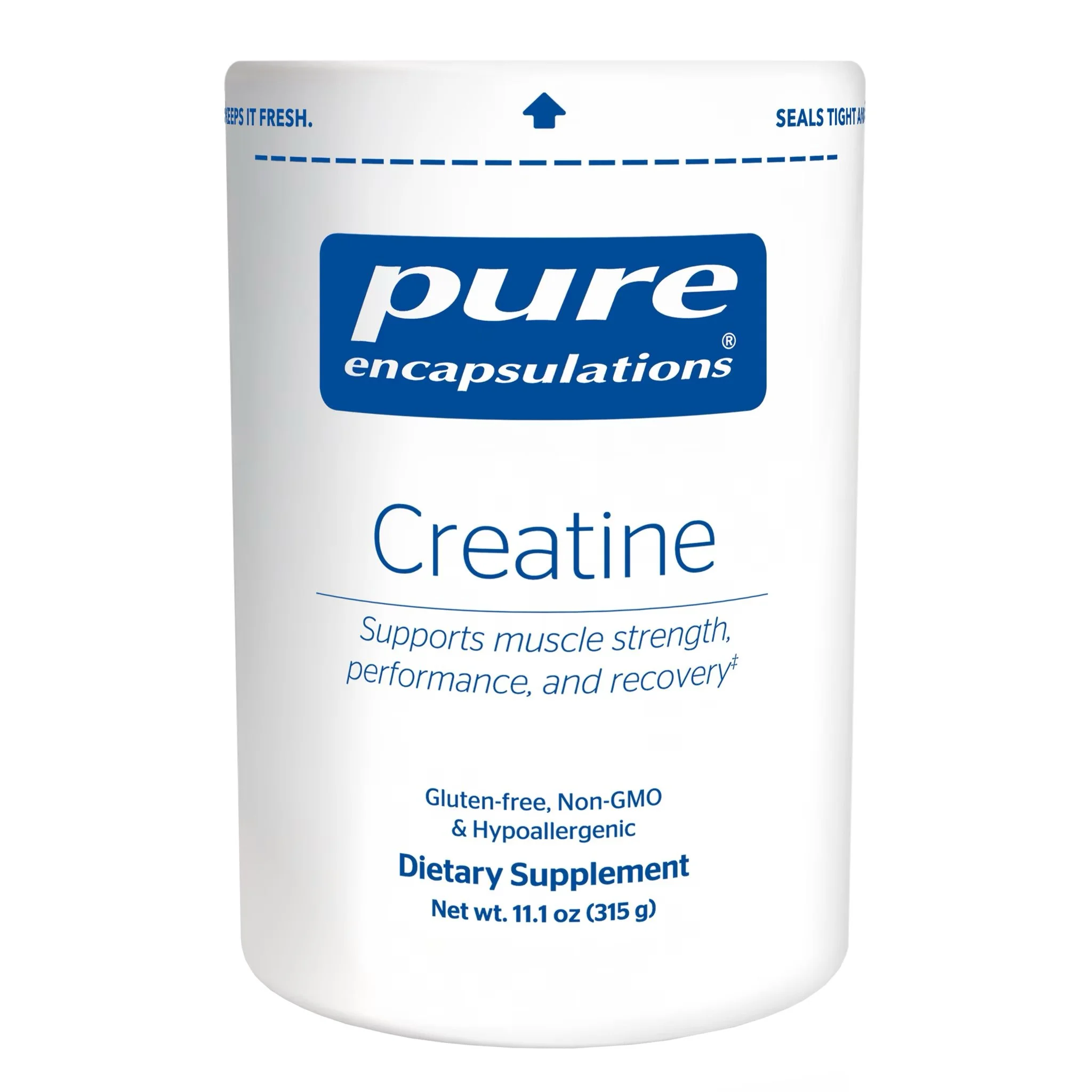
11.1 oz., or 315 grams, of powder
How Creatine Supports Cellular Energy
Creatine helps maintain a reserve of rapidly available energy within muscle cells.
During intense physical activity, the body uses ATP to power muscle contraction. Because stored ATP is depleted quickly, phosphocreatine donates a phosphate group that helps convert ADP back into usable ATP.
This energy system is especially important during high-intensity, short-duration activities such as:
Weightlifting
Sprinting
Jumping
High-intensity interval training
Competitive sports
Explosive athletic movements
Repeated sets of resistance exercise
By supporting rapid ATP regeneration, creatine may help you complete additional repetitions, maintain power across repeated efforts and train at a higher overall capacity.
Creatine for Strength and Muscle Development
Creatine does not build muscle without training. Instead, it helps support the energy and training capacity needed to produce meaningful muscular adaptations.
When used alongside progressive resistance training, creatine can support:
Greater strength gains
Improved power output
Increased training volume
Lean body-mass development
Improved muscular performance
Better adaptation to demanding workouts
Creatine works best when combined with a structured resistance-training program, adequate dietary protein, sufficient calories and consistent recovery.
Creatine for Workout Performance
Creatine is particularly useful for activities that require repeated bursts of strength, speed or power.
It may support performance during:
Strength training
Bodybuilding
Powerlifting
Sprinting
Cross-training
Football
Basketball
Soccer
Combat sports
Dance and athletic performance
Other high-intensity activities
Creatine is less likely to produce a dramatic effect during a single low-intensity endurance session, but it may still support training quality, strength work and recovery within a broader endurance program.
Creatine for Recovery
Intense exercise places significant demands on muscles and cellular energy systems. Creatine helps restore phosphocreatine availability and supports glycogen storage, muscular adaptation and recovery from strenuous training.
For a complete recovery routine, combine creatine with:
Adequate daily protein
Proper hydration
Electrolytes when needed
Sufficient carbohydrates for demanding training
Quality sleep
Mobility and flexibility work
Appropriate rest between workouts
Creatine is not a pain reliever and should not be used to mask an injury or unexplained muscle pain.
Creatine and Healthy Aging
Maintaining muscle and strength becomes increasingly important throughout adulthood. Muscle mass supports mobility, balance, metabolic health, bone loading and the ability to remain active and independent.
Creatine can be a valuable component of a healthy-aging program, particularly when paired with resistance training. It may help support:
Preservation of muscular strength
Lean body-mass development
Functional physical performance
Exercise capacity
Mobility and independence
Healthy body composition
Long-term physical resilience
Creatine is not only for competitive athletes or bodybuilders. It can also benefit recreational exercisers and adults who want to protect their ability to move, train and remain active as they age.
Creatine and Brain Energy
Creatine is naturally present not only in muscle tissue but also in the brain and other organs. The brain uses ATP to support communication between neurons, concentration and other energy-demanding processes.
Research into creatine and cognitive performance is continuing. Potential benefits may be more relevant during periods of increased mental demand, sleep deprivation or low dietary creatine intake.
Creatine should not be presented as a treatment for memory loss, cognitive decline or a neurological condition. It is best positioned as nutritional support for normal cellular energy.
An Excellent Option for Vegetarians
Creatine is naturally present in animal-based foods such as meat and fish. Plant foods contain little to no creatine, which means vegetarians may consume less dietary creatine than people who regularly eat animal products.
Pure Encapsulations Creatine is synthetically sourced and made with vegetarian ingredients, making it a convenient option for plant-focused adults seeking supplemental creatine.
Clean, Unflavored Creatine Powder
The unflavored formula can be added to:
Water
Protein shakes
Smoothies
Electrolyte drinks
Juice
Pre-workout beverages
Post-workout recovery drinks
Creatine may settle if it is left standing for an extended period. Stir or shake the beverage thoroughly and consume it shortly after mixing.
Product Highlights
5 grams of creatine monohydrate per serving
Approximately 60 servings per container
11.1 oz., or 315 grams, of powder
Single-ingredient formula
Unflavored and easy to mix
Supports strength, power and workout performance
Supports rapid ATP regeneration
Supports recovery from strenuous exercise
Supports lean muscle development with resistance training
Suitable for active adults and athletes
Suitable for healthy-aging routines
Made with vegetarian ingredients
Synthetically sourced creatine monohydrate
Gluten-free
GMO-free
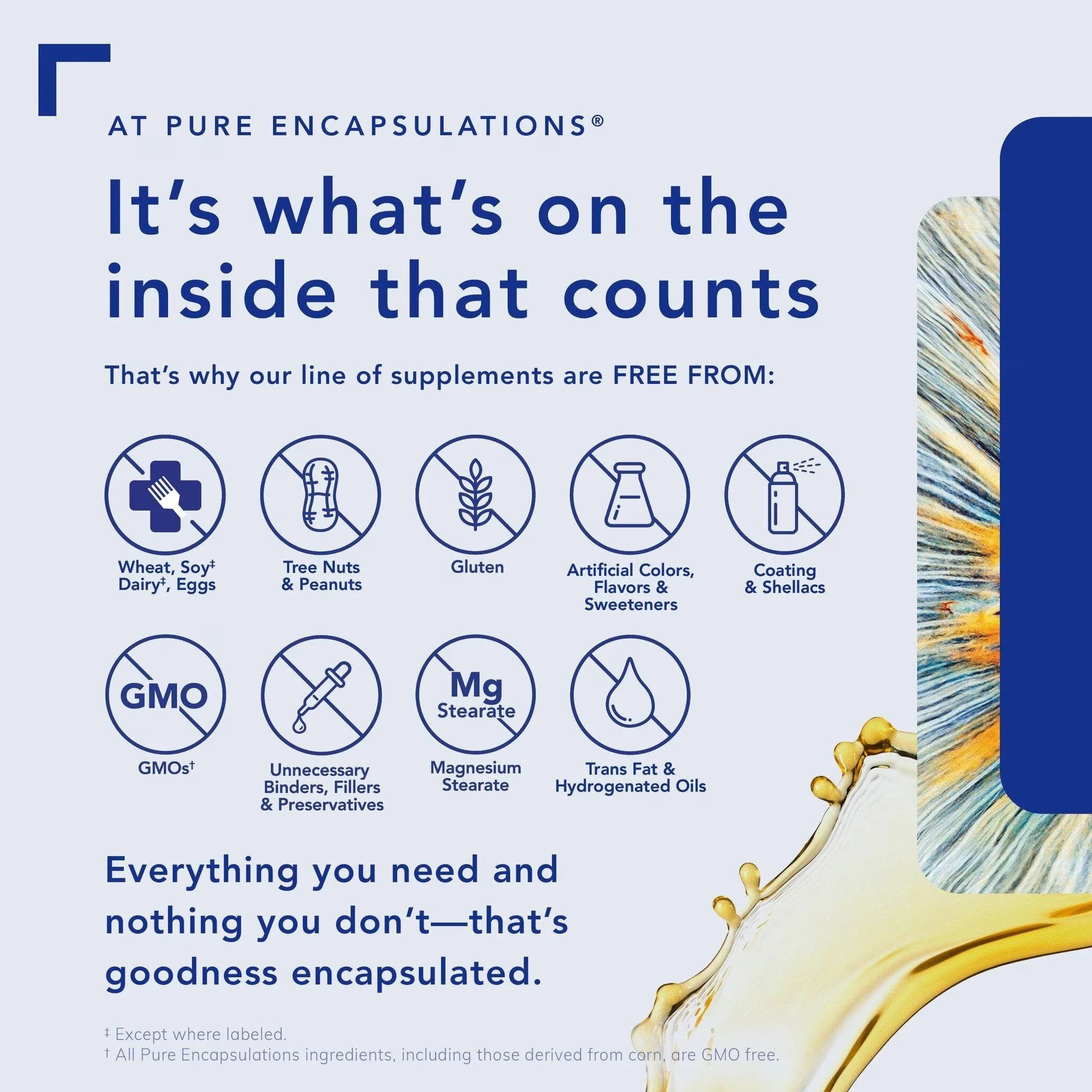
Free from artificial colors and sweeteners
Free from unnecessary binders, fillers and preservatives
No magnesium stearate
Suggested Use
Mix 1½ teaspoons daily with 8 ounces of water or another beverage.
For exercise days, take the serving with a carbohydrate-containing beverage or food approximately 30 minutes before exercise or immediately following exercise.
On rest days, take one serving with a meal.
Maintain adequate fluid intake throughout the day.
A plastic scoop is not included. Measure each serving using a standard kitchen teaspoon.
Frequently Asked Questions
What is Pure Encapsulations Creatine?
Pure Encapsulations Creatine is an unflavored creatine monohydrate powder formulated to support muscular strength, power, workout performance, ATP regeneration and recovery following strenuous exercise.
How much creatine is in each serving?
Each 1½-teaspoon serving provides 5 grams of creatine monohydrate.
How many servings are in each container?
Each 11.1 oz. container provides approximately 60 servings.
What ingredients are in Pure Encapsulations Creatine?
The formula contains creatine monohydrate without added flavors, sweeteners or proprietary blends.
Is a scoop included?
No. A plastic scoop is not included. Measure one serving using 1½ standard kitchen teaspoons.
How should I take Pure Encapsulations Creatine?
Mix 1½ teaspoons with approximately 8 ounces of water or another beverage and take it once daily.
On workout days, it can be taken shortly before or immediately after exercise. On rest days, take it with a meal.
Should I take creatine every day?
Yes. Consistent daily use helps maintain elevated creatine stores within muscle tissue. Take it on both training and rest days.
What is the best time to take creatine?
Creatine can be taken at any convenient time. Daily consistency is generally more important than exact timing.
Taking it with a meal or a post-workout beverage containing protein and carbohydrates is a convenient option.
Should I take creatine before or after a workout?
Either timing can work. Taking creatine before exercise places it within your pre-workout routine, while taking it afterward makes it easy to combine with a recovery shake or meal.
The most important factor is taking the full serving consistently.
Do I need to complete a creatine loading phase?
No. A loading phase is not required.
Taking 3 to 5 grams daily can gradually increase muscular creatine stores over approximately three to four weeks. A loading phase may increase stores more quickly, but it can also increase the likelihood of temporary digestive discomfort.
What is creatine loading?
A traditional loading protocol involves taking several smaller servings totaling approximately 20 grams per day for five to seven days before transitioning to a maintenance serving.
Loading is optional and is not necessary to receive the long-term benefits of creatine supplementation.
How long does creatine take to work?
Without a loading phase, muscular creatine stores generally increase gradually over several weeks.
Changes in strength, training performance or body composition also depend on exercise programming, nutrition, sleep and consistency.
What does creatine do?
Creatine supports the rapid regeneration of ATP, the energy used during intense muscle contractions. This can help support repeated bursts of power, strength and high-intensity exercise.
Does creatine help build muscle?
Creatine can support lean muscle development when combined with progressive resistance training and adequate nutrition.
It does not create muscle without exercise, but it may improve the quality and volume of training that stimulates muscular growth.
Does creatine improve strength?
Creatine monohydrate can support improvements in strength and power, particularly when used consistently alongside resistance training.
Is creatine good for recovery?
Creatine supports the restoration of cellular energy and may support glycogen storage and muscular adaptation following strenuous exercise.
It should be combined with adequate protein, hydration, sleep and appropriate recovery time.
Is creatine only for bodybuilders?
No. Creatine may benefit:
Recreational exercisers
Strength-training adults
Competitive athletes
Older adults
Vegetarians
People focused on maintaining lean muscle
Adults pursuing healthy-aging goals
Can women take creatine?
Yes. Creatine can support muscular strength, training performance, lean body mass and healthy aging in both women and men.
It does not contain hormones or anabolic steroids.
Can older adults take creatine?
Yes. Creatine is commonly used by older adults to complement resistance training and support strength, lean mass and functional performance.
Adults with kidney disease, complex health conditions or multiple medications should consult a healthcare professional before use.
Does creatine cause weight gain?
Creatine may cause a modest increase in body weight, particularly during the first few weeks of use.
This is commonly related to additional water being stored within muscle cells and is not the same as gaining body fat. Longer-term changes may also reflect increased lean muscle from improved training.
Does creatine cause bloating?
Some people notice temporary water-weight changes or digestive fullness. These effects may be more common with large loading servings.
Using one 5-gram daily serving and maintaining adequate hydration may improve tolerance.
Does creatine cause water retention?
Creatine can increase water stored inside muscle cells. This intracellular water supports a fuller muscular appearance and differs from generalized fluid retention beneath the skin.
Does creatine increase body fat?
No. Creatine does not directly increase body fat.
Changes on the scale may result from additional water within muscle tissue or increased lean body mass when creatine is combined with resistance training.
Can creatine support weight-loss or body-composition goals?
Creatine is not a fat-burning supplement. However, it can support strength, workout quality and lean muscle retention while following an appropriate nutrition and exercise program.
Maintaining muscle can be valuable during a calorie deficit and long-term body-composition plan.
Can I take creatine while cutting calories?
Yes. Creatine can be used during a calorie deficit to support training performance and lean muscle retention.
Scale weight may still increase slightly from water stored within the muscles, even when body fat is decreasing.
Does creatine contain calories?
Creatine monohydrate is not used as a conventional source of dietary calories. Review the current Supplement Facts panel for complete product information.
Does creatine contain caffeine?
No. Creatine is not caffeine and does not act as a stimulant.
It supports cellular energy through the phosphocreatine and ATP system rather than stimulating the central nervous system.
Can I take creatine at night?
Yes. Creatine can be taken at night because it does not contain caffeine.
People who prefer to drink less fluid close to bedtime may find an earlier serving more convenient.
Can I mix creatine with protein powder?
Yes. Creatine can be mixed into a protein shake, smoothie or post-workout beverage.
Protein and creatine serve complementary functions. Protein provides amino acids for tissue repair, while creatine supports rapid cellular energy availability.
Can I mix creatine with electrolytes?
Yes. Creatine can be added to an electrolyte beverage.
This can be especially convenient after exercise, sauna use or other activities that increase fluid loss.
Can I mix creatine with coffee?
Creatine can be added to coffee or another caffeinated beverage, although hot liquids and extended storage may affect taste or texture.
For simplicity, many customers prefer mixing it with cool water, a shake or an electrolyte drink and consuming it soon after preparation.
Can I take creatine with carbohydrates?
Yes. Creatine can be taken alongside carbohydrate-containing food or beverages.
Carbohydrates stimulate insulin release, which may help support creatine uptake into muscle tissue. A carbohydrate-containing post-workout meal is a convenient option.
Can I take creatine with Magnesium Glycinate?
Yes. Creatine and magnesium support different aspects of muscular function and cellular energy and can generally be included in the same wellness routine.
Can I take creatine with O.N.E. Multivitamin?
Yes. A multivitamin provides foundational vitamins and minerals, while creatine provides targeted support for ATP regeneration, strength and performance.
Can I take creatine with O.N.E. Omega?
Yes. Creatine and omega-3 fatty acids serve different nutritional roles and can be taken within the same daily routine.
Can I take creatine with Ubiquinol-QH?
Yes. Both participate in cellular-energy support through different biological pathways and can be used together in fitness and healthy-aging routines.
Is Pure Encapsulations Creatine vegetarian?
Yes. The creatine monohydrate is synthetically sourced and the product is made with vegetarian ingredients.
Is Pure Encapsulations Creatine vegan?
The formula does not contain an animal-derived creatine source, but customers following a strict vegan lifestyle should review the current packaging or contact Panther Longevity for ingredient confirmation.
Is Pure Encapsulations Creatine gluten-free?
Yes. It is formulated without gluten.
Is creatine safe for daily use?
Creatine monohydrate is one of the most extensively studied sports-nutrition ingredients and is generally well tolerated by healthy adults when taken appropriately.
Customers with kidney disease, medical conditions or prescription medications should consult a healthcare professional before use.
Does creatine damage the kidneys?
Recommended creatine use has not been shown to damage kidney function in otherwise healthy adults.
People with kidney disease, reduced kidney function or abnormal kidney-related laboratory results should not begin creatine without professional guidance.
Can creatine affect creatinine blood-test results?
Creatine use may increase blood creatinine in some individuals because creatinine is a breakdown product of creatine.
An increase in creatinine does not automatically mean kidney damage, but it can affect the interpretation of kidney-function tests. Inform your healthcare professional that you use creatine before laboratory testing.
Can creatine cause dehydration?
Creatine does not inherently cause dehydration when used appropriately, but adequate fluid intake remains important—especially during intense exercise, hot weather or sauna use.
How much water should I drink while taking creatine?
Fluid needs vary according to body size, climate, activity level and sweat rate. Maintain consistent daily hydration and replace fluids lost during exercise or heat exposure.
Can teenagers take Pure Encapsulations Creatine?
This product is intended for adults ages 18 and older. Younger athletes should use creatine only under the supervision of a qualified healthcare professional.
Can pregnant or nursing customers take creatine?
Pregnant or nursing customers should consult a healthcare professional before using creatine.
Who should consult a healthcare professional before taking creatine?
Professional guidance is especially important for customers who:
Have kidney disease or reduced kidney function
Are pregnant or nursing
Take prescription medications
Have a diagnosed medical condition
Are under age 18
Have unexplained swelling or fluid-balance concerns
Are preparing for kidney-function laboratory testing
Can creatine cause digestive discomfort?
Some people experience nausea, cramping or loose stools, particularly when taking large servings at once.
Use the recommended serving, mix it thoroughly and take it with food if needed. Avoid unnecessarily large loading servings if digestive tolerance is a concern.
How should Pure Encapsulations Creatine be stored?
Store the container tightly closed in a cool, dry place away from excessive heat and moisture.
Use a dry teaspoon when measuring the powder to prevent moisture from entering the container.
Pure Creatine Monohydrate for Strength, Power, Muscle Performance and Healthy Aging
Support strength, exercise performance and lean muscle with Pure Encapsulations Creatine, a clean, single-ingredient creatine monohydrate powder designed for active adults, athletes and anyone focused on maintaining physical performance over time.
Each serving provides 5 grams of creatine monohydrate, one of the most extensively studied ingredients in sports nutrition. Creatine helps replenish phosphocreatine within muscle tissue, supporting the rapid regeneration of ATP—the energy used during weightlifting, sprinting and other short bursts of intense physical activity.
When combined with consistent resistance training, adequate protein and proper recovery, creatine can support improvements in strength, power, workout capacity and lean body mass. It can also play an important role in healthy-aging routines focused on preserving muscle, mobility and physical independence.
Pure Encapsulations Creatine is unflavored and easy to mix into water, a protein shake, an electrolyte drink or another beverage of your choice.
Benefits of Pure Encapsulations Creatine
Creatine monohydrate supports:
Muscular strength and power
High-intensity exercise performance
Repeated bursts of speed and force
ATP regeneration and cellular energy
Workout capacity and training volume
Lean muscle development with resistance training
Recovery following strenuous exercise
Glycogen storage in muscle tissue
Maintenance of muscle function during healthy aging
Long-term physical performance and resilience
5 Grams of Creatine Monohydrate per Serving
Each 1½-teaspoon serving delivers 5 grams of pure creatine monohydrate, providing a full daily maintenance serving without proprietary blends, flavors or unnecessary ingredients.
A consistent intake of 3 to 5 grams per day can gradually increase creatine stored within the muscles. At this amount, a separate loading phase is not required.
The container provides approximately:
5 grams of creatine monohydrate per serving
Approximately 60 servings
11.1 oz., or 315 grams, of powder
How Creatine Supports Cellular Energy
Creatine helps maintain a reserve of rapidly available energy within muscle cells.
During intense physical activity, the body uses ATP to power muscle contraction. Because stored ATP is depleted quickly, phosphocreatine donates a phosphate group that helps convert ADP back into usable ATP.
This energy system is especially important during high-intensity, short-duration activities such as:
Weightlifting
Sprinting
Jumping
High-intensity interval training
Competitive sports
Explosive athletic movements
Repeated sets of resistance exercise
By supporting rapid ATP regeneration, creatine may help you complete additional repetitions, maintain power across repeated efforts and train at a higher overall capacity.
Creatine for Strength and Muscle Development
Creatine does not build muscle without training. Instead, it helps support the energy and training capacity needed to produce meaningful muscular adaptations.
When used alongside progressive resistance training, creatine can support:
Greater strength gains
Improved power output
Increased training volume
Lean body-mass development
Improved muscular performance
Better adaptation to demanding workouts
Creatine works best when combined with a structured resistance-training program, adequate dietary protein, sufficient calories and consistent recovery.
Creatine for Workout Performance
Creatine is particularly useful for activities that require repeated bursts of strength, speed or power.
It may support performance during:
Strength training
Bodybuilding
Powerlifting
Sprinting
Cross-training
Football
Basketball
Soccer
Combat sports
Dance and athletic performance
Other high-intensity activities
Creatine is less likely to produce a dramatic effect during a single low-intensity endurance session, but it may still support training quality, strength work and recovery within a broader endurance program.
Creatine for Recovery
Intense exercise places significant demands on muscles and cellular energy systems. Creatine helps restore phosphocreatine availability and supports glycogen storage, muscular adaptation and recovery from strenuous training.
For a complete recovery routine, combine creatine with:
Adequate daily protein
Proper hydration
Electrolytes when needed
Sufficient carbohydrates for demanding training
Quality sleep
Mobility and flexibility work
Appropriate rest between workouts
Creatine is not a pain reliever and should not be used to mask an injury or unexplained muscle pain.
Creatine and Healthy Aging
Maintaining muscle and strength becomes increasingly important throughout adulthood. Muscle mass supports mobility, balance, metabolic health, bone loading and the ability to remain active and independent.
Creatine can be a valuable component of a healthy-aging program, particularly when paired with resistance training. It may help support:
Preservation of muscular strength
Lean body-mass development
Functional physical performance
Exercise capacity
Mobility and independence
Healthy body composition
Long-term physical resilience
Creatine is not only for competitive athletes or bodybuilders. It can also benefit recreational exercisers and adults who want to protect their ability to move, train and remain active as they age.
Creatine and Brain Energy
Creatine is naturally present not only in muscle tissue but also in the brain and other organs. The brain uses ATP to support communication between neurons, concentration and other energy-demanding processes.
Research into creatine and cognitive performance is continuing. Potential benefits may be more relevant during periods of increased mental demand, sleep deprivation or low dietary creatine intake.
Creatine should not be presented as a treatment for memory loss, cognitive decline or a neurological condition. It is best positioned as nutritional support for normal cellular energy.
An Excellent Option for Vegetarians
Creatine is naturally present in animal-based foods such as meat and fish. Plant foods contain little to no creatine, which means vegetarians may consume less dietary creatine than people who regularly eat animal products.
Pure Encapsulations Creatine is synthetically sourced and made with vegetarian ingredients, making it a convenient option for plant-focused adults seeking supplemental creatine.
Clean, Unflavored Creatine Powder
The unflavored formula can be added to:
Water
Protein shakes
Smoothies
Electrolyte drinks
Juice
Pre-workout beverages
Post-workout recovery drinks
Creatine may settle if it is left standing for an extended period. Stir or shake the beverage thoroughly and consume it shortly after mixing.
Product Highlights
5 grams of creatine monohydrate per serving
Approximately 60 servings per container
11.1 oz., or 315 grams, of powder
Single-ingredient formula
Unflavored and easy to mix
Supports strength, power and workout performance
Supports rapid ATP regeneration
Supports recovery from strenuous exercise
Supports lean muscle development with resistance training
Suitable for active adults and athletes
Suitable for healthy-aging routines
Made with vegetarian ingredients
Synthetically sourced creatine monohydrate
Gluten-free
GMO-free
Free from artificial colors and sweeteners
Free from unnecessary binders, fillers and preservatives
No magnesium stearate
Suggested Use
Mix 1½ teaspoons daily with 8 ounces of water or another beverage.
For exercise days, take the serving with a carbohydrate-containing beverage or food approximately 30 minutes before exercise or immediately following exercise.
On rest days, take one serving with a meal.
Maintain adequate fluid intake throughout the day.
A plastic scoop is not included. Measure each serving using a standard kitchen teaspoon.
Frequently Asked Questions
What is Pure Encapsulations Creatine?
Pure Encapsulations Creatine is an unflavored creatine monohydrate powder formulated to support muscular strength, power, workout performance, ATP regeneration and recovery following strenuous exercise.
How much creatine is in each serving?
Each 1½-teaspoon serving provides 5 grams of creatine monohydrate.
How many servings are in each container?
Each 11.1 oz. container provides approximately 60 servings.
What ingredients are in Pure Encapsulations Creatine?
The formula contains creatine monohydrate without added flavors, sweeteners or proprietary blends.
Is a scoop included?
No. A plastic scoop is not included. Measure one serving using 1½ standard kitchen teaspoons.
How should I take Pure Encapsulations Creatine?
Mix 1½ teaspoons with approximately 8 ounces of water or another beverage and take it once daily.
On workout days, it can be taken shortly before or immediately after exercise. On rest days, take it with a meal.
Should I take creatine every day?
Yes. Consistent daily use helps maintain elevated creatine stores within muscle tissue. Take it on both training and rest days.
What is the best time to take creatine?
Creatine can be taken at any convenient time. Daily consistency is generally more important than exact timing.
Taking it with a meal or a post-workout beverage containing protein and carbohydrates is a convenient option.
Should I take creatine before or after a workout?
Either timing can work. Taking creatine before exercise places it within your pre-workout routine, while taking it afterward makes it easy to combine with a recovery shake or meal.
The most important factor is taking the full serving consistently.
Do I need to complete a creatine loading phase?
No. A loading phase is not required.
Taking 3 to 5 grams daily can gradually increase muscular creatine stores over approximately three to four weeks. A loading phase may increase stores more quickly, but it can also increase the likelihood of temporary digestive discomfort.
What is creatine loading?
A traditional loading protocol involves taking several smaller servings totaling approximately 20 grams per day for five to seven days before transitioning to a maintenance serving.
Loading is optional and is not necessary to receive the long-term benefits of creatine supplementation.
How long does creatine take to work?
Without a loading phase, muscular creatine stores generally increase gradually over several weeks.
Changes in strength, training performance or body composition also depend on exercise programming, nutrition, sleep and consistency.
What does creatine do?
Creatine supports the rapid regeneration of ATP, the energy used during intense muscle contractions. This can help support repeated bursts of power, strength and high-intensity exercise.
Does creatine help build muscle?
Creatine can support lean muscle development when combined with progressive resistance training and adequate nutrition.
It does not create muscle without exercise, but it may improve the quality and volume of training that stimulates muscular growth.
Does creatine improve strength?
Creatine monohydrate can support improvements in strength and power, particularly when used consistently alongside resistance training.
Is creatine good for recovery?
Creatine supports the restoration of cellular energy and may support glycogen storage and muscular adaptation following strenuous exercise.
It should be combined with adequate protein, hydration, sleep and appropriate recovery time.
Is creatine only for bodybuilders?
No. Creatine may benefit:
Recreational exercisers
Strength-training adults
Competitive athletes
Older adults
Vegetarians
People focused on maintaining lean muscle
Adults pursuing healthy-aging goals
Can women take creatine?
Yes. Creatine can support muscular strength, training performance, lean body mass and healthy aging in both women and men.
It does not contain hormones or anabolic steroids.
Can older adults take creatine?
Yes. Creatine is commonly used by older adults to complement resistance training and support strength, lean mass and functional performance.
Adults with kidney disease, complex health conditions or multiple medications should consult a healthcare professional before use.
Does creatine cause weight gain?
Creatine may cause a modest increase in body weight, particularly during the first few weeks of use.
This is commonly related to additional water being stored within muscle cells and is not the same as gaining body fat. Longer-term changes may also reflect increased lean muscle from improved training.
Does creatine cause bloating?
Some people notice temporary water-weight changes or digestive fullness. These effects may be more common with large loading servings.
Using one 5-gram daily serving and maintaining adequate hydration may improve tolerance.
Does creatine cause water retention?
Creatine can increase water stored inside muscle cells. This intracellular water supports a fuller muscular appearance and differs from generalized fluid retention beneath the skin.
Does creatine increase body fat?
No. Creatine does not directly increase body fat.
Changes on the scale may result from additional water within muscle tissue or increased lean body mass when creatine is combined with resistance training.
Can creatine support weight-loss or body-composition goals?
Creatine is not a fat-burning supplement. However, it can support strength, workout quality and lean muscle retention while following an appropriate nutrition and exercise program.
Maintaining muscle can be valuable during a calorie deficit and long-term body-composition plan.
Can I take creatine while cutting calories?
Yes. Creatine can be used during a calorie deficit to support training performance and lean muscle retention.
Scale weight may still increase slightly from water stored within the muscles, even when body fat is decreasing.
Does creatine contain calories?
Creatine monohydrate is not used as a conventional source of dietary calories. Review the current Supplement Facts panel for complete product information.
Does creatine contain caffeine?
No. Creatine is not caffeine and does not act as a stimulant.
It supports cellular energy through the phosphocreatine and ATP system rather than stimulating the central nervous system.
Can I take creatine at night?
Yes. Creatine can be taken at night because it does not contain caffeine.
People who prefer to drink less fluid close to bedtime may find an earlier serving more convenient.
Can I mix creatine with protein powder?
Yes. Creatine can be mixed into a protein shake, smoothie or post-workout beverage.
Protein and creatine serve complementary functions. Protein provides amino acids for tissue repair, while creatine supports rapid cellular energy availability.
Can I mix creatine with electrolytes?
Yes. Creatine can be added to an electrolyte beverage.
This can be especially convenient after exercise, sauna use or other activities that increase fluid loss.
Can I mix creatine with coffee?
Creatine can be added to coffee or another caffeinated beverage, although hot liquids and extended storage may affect taste or texture.
For simplicity, many customers prefer mixing it with cool water, a shake or an electrolyte drink and consuming it soon after preparation.
Can I take creatine with carbohydrates?
Yes. Creatine can be taken alongside carbohydrate-containing food or beverages.
Carbohydrates stimulate insulin release, which may help support creatine uptake into muscle tissue. A carbohydrate-containing post-workout meal is a convenient option.
Can I take creatine with Magnesium Glycinate?
Yes. Creatine and magnesium support different aspects of muscular function and cellular energy and can generally be included in the same wellness routine.
Can I take creatine with O.N.E. Multivitamin?
Yes. A multivitamin provides foundational vitamins and minerals, while creatine provides targeted support for ATP regeneration, strength and performance.
Can I take creatine with O.N.E. Omega?
Yes. Creatine and omega-3 fatty acids serve different nutritional roles and can be taken within the same daily routine.
Can I take creatine with Ubiquinol-QH?
Yes. Both participate in cellular-energy support through different biological pathways and can be used together in fitness and healthy-aging routines.
Is Pure Encapsulations Creatine vegetarian?
Yes. The creatine monohydrate is synthetically sourced and the product is made with vegetarian ingredients.
Is Pure Encapsulations Creatine vegan?
The formula does not contain an animal-derived creatine source, but customers following a strict vegan lifestyle should review the current packaging or contact Panther Longevity for ingredient confirmation.
Is Pure Encapsulations Creatine gluten-free?
Yes. It is formulated without gluten.
Is creatine safe for daily use?
Creatine monohydrate is one of the most extensively studied sports-nutrition ingredients and is generally well tolerated by healthy adults when taken appropriately.
Customers with kidney disease, medical conditions or prescription medications should consult a healthcare professional before use.
Does creatine damage the kidneys?
Recommended creatine use has not been shown to damage kidney function in otherwise healthy adults.
People with kidney disease, reduced kidney function or abnormal kidney-related laboratory results should not begin creatine without professional guidance.
Can creatine affect creatinine blood-test results?
Creatine use may increase blood creatinine in some individuals because creatinine is a breakdown product of creatine.
An increase in creatinine does not automatically mean kidney damage, but it can affect the interpretation of kidney-function tests. Inform your healthcare professional that you use creatine before laboratory testing.
Can creatine cause dehydration?
Creatine does not inherently cause dehydration when used appropriately, but adequate fluid intake remains important—especially during intense exercise, hot weather or sauna use.
How much water should I drink while taking creatine?
Fluid needs vary according to body size, climate, activity level and sweat rate. Maintain consistent daily hydration and replace fluids lost during exercise or heat exposure.
Can teenagers take Pure Encapsulations Creatine?
This product is intended for adults ages 18 and older. Younger athletes should use creatine only under the supervision of a qualified healthcare professional.
Can pregnant or nursing customers take creatine?
Pregnant or nursing customers should consult a healthcare professional before using creatine.
Who should consult a healthcare professional before taking creatine?
Professional guidance is especially important for customers who:
Have kidney disease or reduced kidney function
Are pregnant or nursing
Take prescription medications
Have a diagnosed medical condition
Are under age 18
Have unexplained swelling or fluid-balance concerns
Are preparing for kidney-function laboratory testing
Can creatine cause digestive discomfort?
Some people experience nausea, cramping or loose stools, particularly when taking large servings at once.
Use the recommended serving, mix it thoroughly and take it with food if needed. Avoid unnecessarily large loading servings if digestive tolerance is a concern.
How should Pure Encapsulations Creatine be stored?
Store the container tightly closed in a cool, dry place away from excessive heat and moisture.
Use a dry teaspoon when measuring the powder to prevent moisture from entering the container.