Pure Encapsulations Taurine
Cellular, Cardiovascular and Exercise Support for Healthy Aging
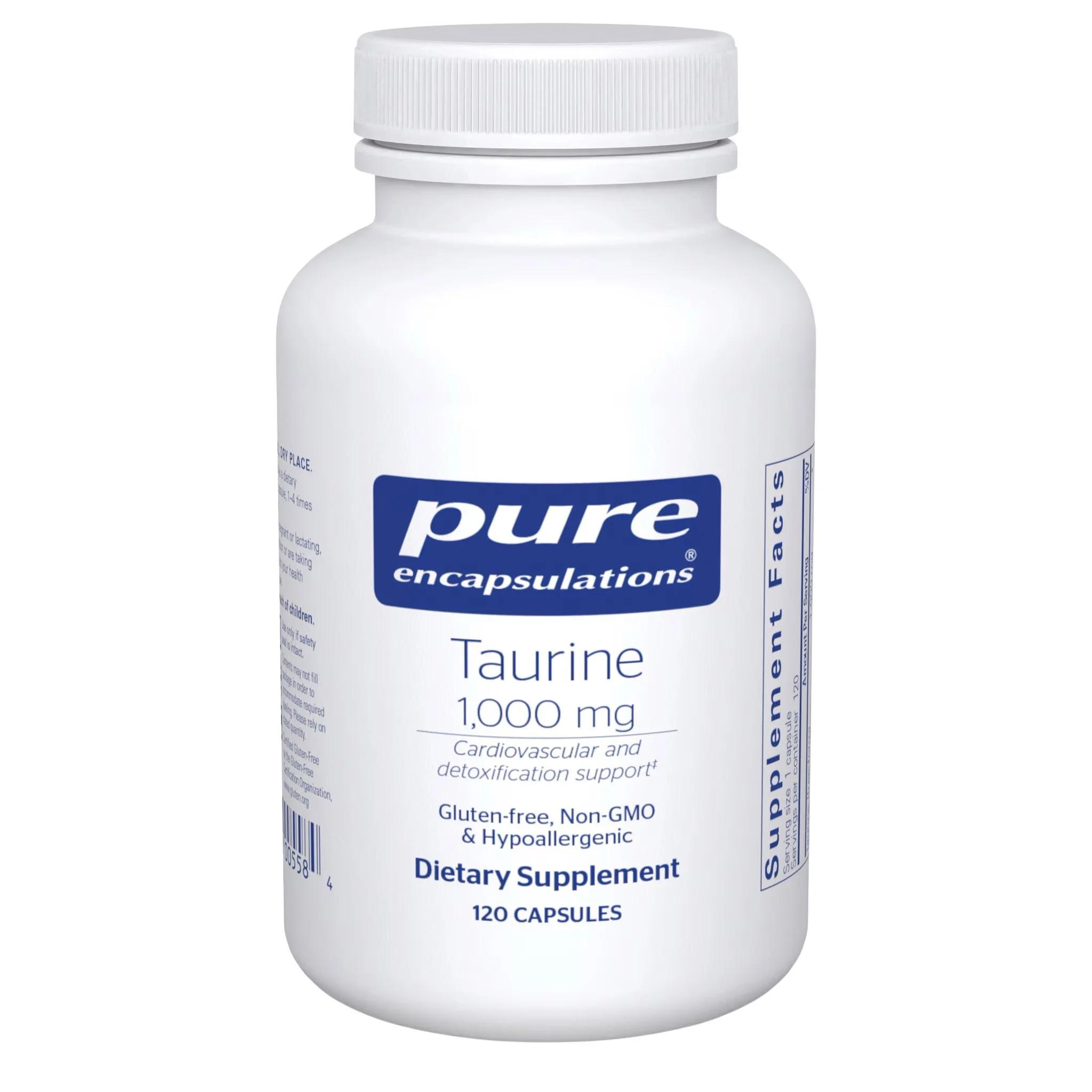
Support cardiovascular function, cellular hydration and long-term physical resilience with Pure Encapsulations Taurine 1,000 mg.
Each vegan capsule provides 1,000 mg of taurine, a sulfur-containing amino compound naturally concentrated in metabolically active tissues such as the heart, brain, muscles, eyes and nervous system.
Taurine plays several important roles throughout the body. It helps stabilize cell membranes, supports the movement of electrolytes into and out of cells, contributes to healthy heart-muscle function and participates in the formation of bile acids needed for normal fat digestion and absorption.
Taurine is also involved in cellular hydration, antioxidant defenses, nervous-system function and exercise physiology. These wide-ranging roles make it a valuable addition to healthy-aging and active-lifestyle routines.
Pure Encapsulations Taurine provides a clean, high-potency formula without caffeine, sugar, flavors or unnecessary active ingredients.
Benefits of Taurine
Taurine supports:
Cardiovascular function
Healthy heart-muscle contractility
Cellular hydration and electrolyte balance
Normal muscle and nervous-system function
Cell-membrane stability
Healthy bile-acid formation
Digestion and absorption of dietary fats
Gallbladder and liver wellness
Healthy hepatic lipid metabolism
Normal detoxification processes
Brain and neurological health
Eye and retinal wellness
Exercise performance and recovery
Antioxidant defenses
Long-term healthy-aging goals
What Is Taurine?
Taurine is a naturally occurring sulfur-containing amino compound found throughout the body.
Although it is commonly referred to as an amino acid, taurine is not used to build proteins in the same way as essential amino acids such as lysine, leucine or valine. Instead, it remains available in tissues where it performs specialized cellular and metabolic functions.
Taurine is especially concentrated in:
Heart tissue
Skeletal muscle
The brain
The nervous system
The retina
Blood cells
Other electrically active tissues
The body can produce taurine from the sulfur-containing amino acids cysteine and methionine. Taurine is also obtained through foods, particularly meat, fish and seafood.
Individual taurine status can be influenced by diet, age, metabolism and health conditions.
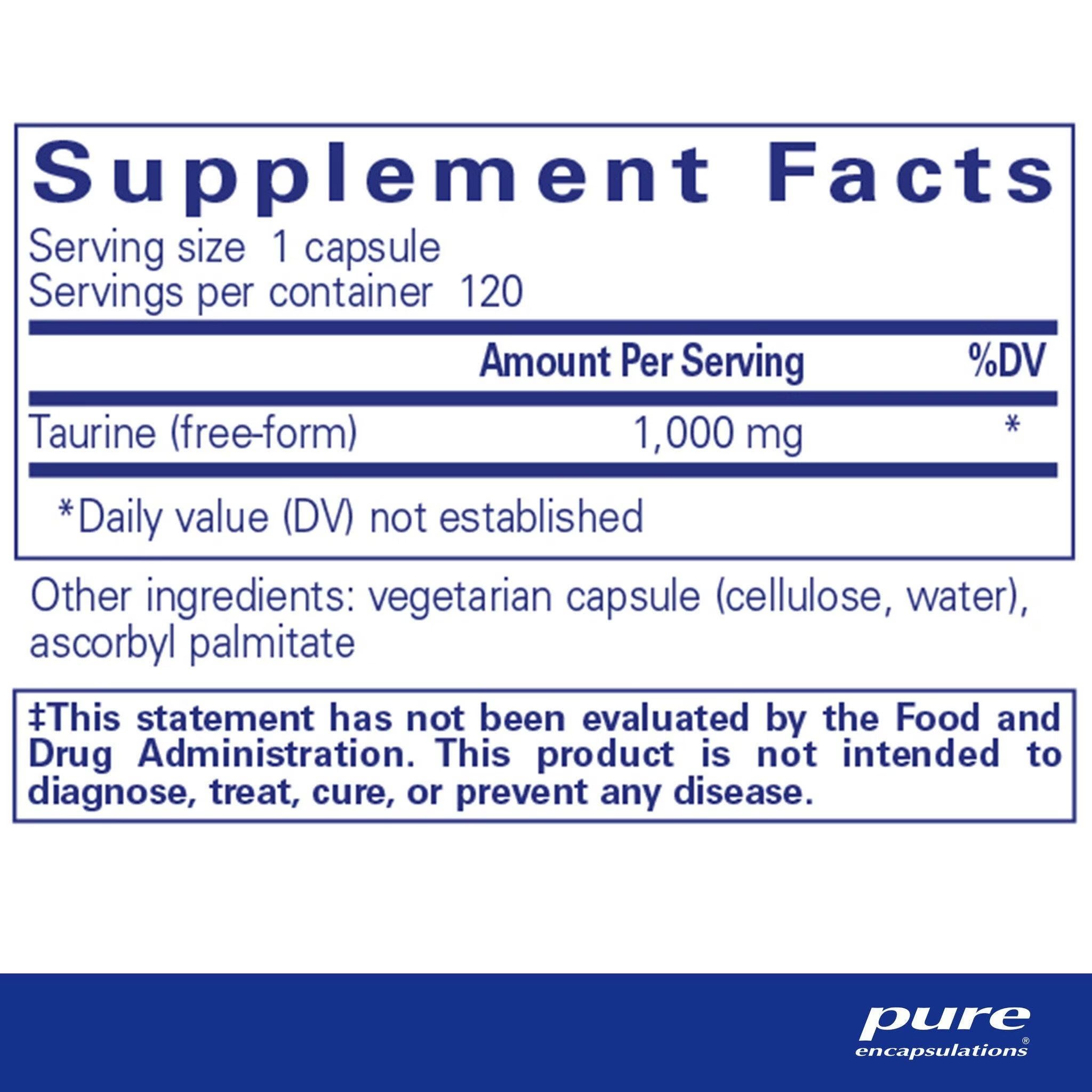
1,000 mg of Taurine per Capsule
Each vegan capsule provides:
Taurine — 1,000 mg
The taurine is synthetically produced, providing a consistent vegan source without animal-derived taurine.
The 1,000 mg formula offers a convenient high-potency option for adults who do not want to take several lower-strength capsules.
Taurine for Cardiovascular Health
The heart is one of the body’s most metabolically active organs and contains a significant concentration of taurine.
Taurine helps support cardiovascular wellness through several complementary roles, including:
Cell-membrane stabilization
Electrolyte movement across heart-muscle cells
Normal calcium signaling
Healthy heart-muscle contraction
Vascular function
Antioxidant protection
Normal fluid balance
Taurine can complement a heart-healthy lifestyle that includes:
Regular cardiovascular exercise
Resistance training
A nutrient-dense diet
Healthy blood-pressure management
Appropriate cholesterol monitoring
Healthy glucose regulation
Quality sleep
Avoiding tobacco
Taurine is not a cardiovascular medication and should not replace prescribed treatment for high blood pressure, heart failure, abnormal heart rhythm or another heart condition.
Cellular Hydration and Electrolyte Balance
Taurine functions as an osmolyte—a compound that helps cells regulate their internal fluid balance.
Maintaining proper cellular hydration is essential for:
Cell volume
Membrane stability
Muscle function
Nerve signaling
Electrolyte balance
Adaptation to physical stress
Taurine also supports the normal movement of sodium, potassium, calcium and magnesium across cell membranes.
These functions make taurine relevant to active adults, athletes and anyone focused on maintaining muscular and neurological performance over time.
Taurine is not a replacement for water or electrolyte intake. During exercise, heat exposure or heavy sweating, adequate fluids and dietary electrolytes remain essential.
Taurine for Muscle Function and Exercise
Taurine is naturally concentrated in skeletal muscle, where it contributes to cellular hydration, calcium handling and normal muscle contraction.
It may complement exercise routines focused on:
Muscular endurance
Training capacity
Repeated physical effort
Exercise recovery
Cellular hydration
Healthy muscle function
Long-term physical performance
Taurine is especially relevant for:
Strength training
Running
Cycling
High-intensity interval training
Dance
Recreational sports
Long-duration physical activity
Active-aging programs
Taurine is not a stimulant and does not provide an immediate caffeine-like surge. Its value comes from supporting normal cellular and muscular function.
Taurine and Exercise Recovery
Intense physical activity increases demands on muscle cells, hydration systems and antioxidant defenses.
Taurine can complement a complete recovery routine by supporting:
Normal muscle-cell function
Cellular fluid balance
Electrolyte movement
Antioxidant activity
Healthy responses to physical stress
Continued exercise performance
For comprehensive recovery, combine taurine with:
Adequate dietary protein
Creatine monohydrate
Proper hydration
Electrolytes when needed
Sufficient carbohydrates
Magnesium
Quality sleep
Appropriate rest between workouts
Taurine should not be used to mask an injury, severe muscle pain or persistent weakness.
Taurine for Brain and Nervous-System Health
Taurine is abundant in the brain and nervous system, where it contributes to cell-membrane stability, electrolyte regulation and normal neurological signaling.
It also participates in inhibitory signaling and helps maintain balanced nervous-system activity.
Taurine may support:
Healthy neuronal function
Normal nerve signaling
Cellular protection
Mental and neurological wellness
A balanced response to cellular stress
Taurine is not a sedative, antidepressant or treatment for neurological disease.
Taurine for Eye and Retinal Health
The retina contains a high concentration of taurine.
Taurine contributes to the normal structure, function and protection of retinal cells, making it relevant to long-term visual wellness.
A complete eye-health routine should also include:
Regular comprehensive eye examinations
Blood-glucose and blood-pressure management
Protection from excessive ultraviolet exposure
Adequate intake of lutein, zeaxanthin and omega-3 fatty acids
Avoiding tobacco
Taurine does not treat vision loss or retinal disease. Sudden or progressive changes in vision require prompt professional evaluation.
Bile Formation and Fat Digestion
Taurine combines with bile acids to form compounds such as taurocholate.
Bile acids help the digestive system emulsify fats so they can be properly digested and absorbed. This process also supports the absorption of fat-soluble nutrients, including vitamins A, D, E and K.
Taurine therefore contributes to:
Normal bile-acid formation
Digestion of dietary fats
Absorption of fat-soluble vitamins
Gallbladder function
Hepatic lipid metabolism
It is not a digestive enzyme or treatment for gallstones, bile-duct obstruction or gallbladder disease.
Liver and Detoxification Support
The liver continuously processes nutrients, hormones, medications and metabolic byproducts.
Taurine contributes to normal liver chemistry, bile formation and lipid metabolism. It also supports antioxidant defenses that help protect cells during normal metabolic activity.
Taurine may complement a liver-wellness routine that includes:
Limiting excessive alcohol
Maintaining a healthy body composition
Consuming adequate protein and fiber
Managing blood glucose and triglycerides
Staying physically active
Avoiding unnecessary exposure to toxins
Following appropriate medical care
Taurine is not a detox cleanse and should not replace evaluation or treatment for liver disease.
Taurine and Healthy Aging
Taurine has attracted growing interest within healthy-aging research because levels and metabolism can change across the lifespan.
Its known physiological roles make it relevant to several foundations of longevity, including:
Cardiovascular function
Muscle health
Cellular hydration
Nervous-system wellness
Mitochondrial and metabolic function
Antioxidant protection
Eye health
Bile and liver function
Research into taurine supplementation and human longevity is still developing. Taurine should not be represented as extending lifespan or preventing age-related disease.
Its strongest position is as a nutrient that supports systems associated with long-term health, physical function and resilience.
Taurine and Metabolic Wellness
Taurine participates in cellular signaling, lipid metabolism and normal energy regulation.
It may complement a metabolic-health routine focused on:
Healthy glucose metabolism
Lipid balance
Cellular energy
Cardiovascular wellness
Healthy body composition
Regular physical activity
Taurine is not a weight-loss supplement, appetite suppressant or blood-glucose medication.
Is Taurine an Energy-Drink Ingredient?
Taurine is commonly added to energy drinks, but taurine itself is not caffeine and is not a conventional stimulant.
The stimulating effects of most energy drinks primarily come from caffeine and sometimes other stimulant ingredients—not taurine.
Pure Encapsulations Taurine contains:
No caffeine
No sugar
No artificial energy blend
No stimulant ingredients
No flavored drink mix
It provides taurine in a straightforward capsule without the additional ingredients found in energy drinks.
Taurine for Vegan and Vegetarian Diets
Taurine occurs naturally in animal-derived foods, especially meat, fish and seafood. Plant foods generally contain little taurine.
The body can produce taurine internally, so it is not classified as an essential nutrient for most healthy adults. However, people who avoid animal foods may consume less preformed taurine through their diet.
Pure Encapsulations Taurine is synthetically produced and suitable for vegan and vegetarian lifestyles.
Product Highlights
1,000 mg of taurine per capsule
120 capsules per bottle
Supports cardiovascular function
Supports healthy heart-muscle contractility
Supports cellular hydration
Supports electrolyte movement across cell membranes
Supports normal muscle and nervous-system function
Supports bile formation and fat digestion
Supports gallbladder and liver wellness
Supports healthy hepatic lipid metabolism
Supports antioxidant defenses
Supports brain and retinal health
Supports exercise performance and recovery
Caffeine-free
Stimulant-free
Synthetically produced taurine
Vegan
Vegetarian
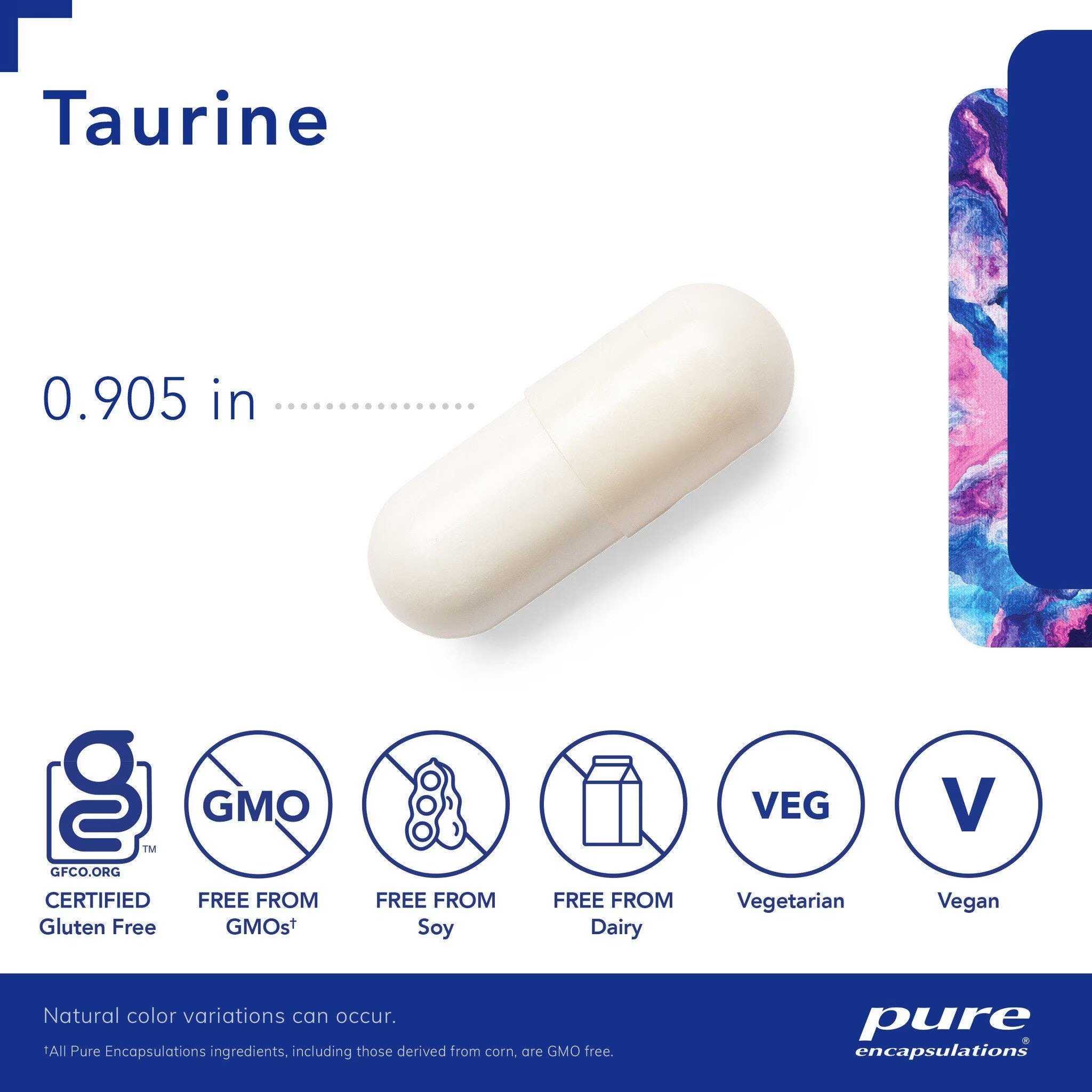
Gluten-free
GMO-free
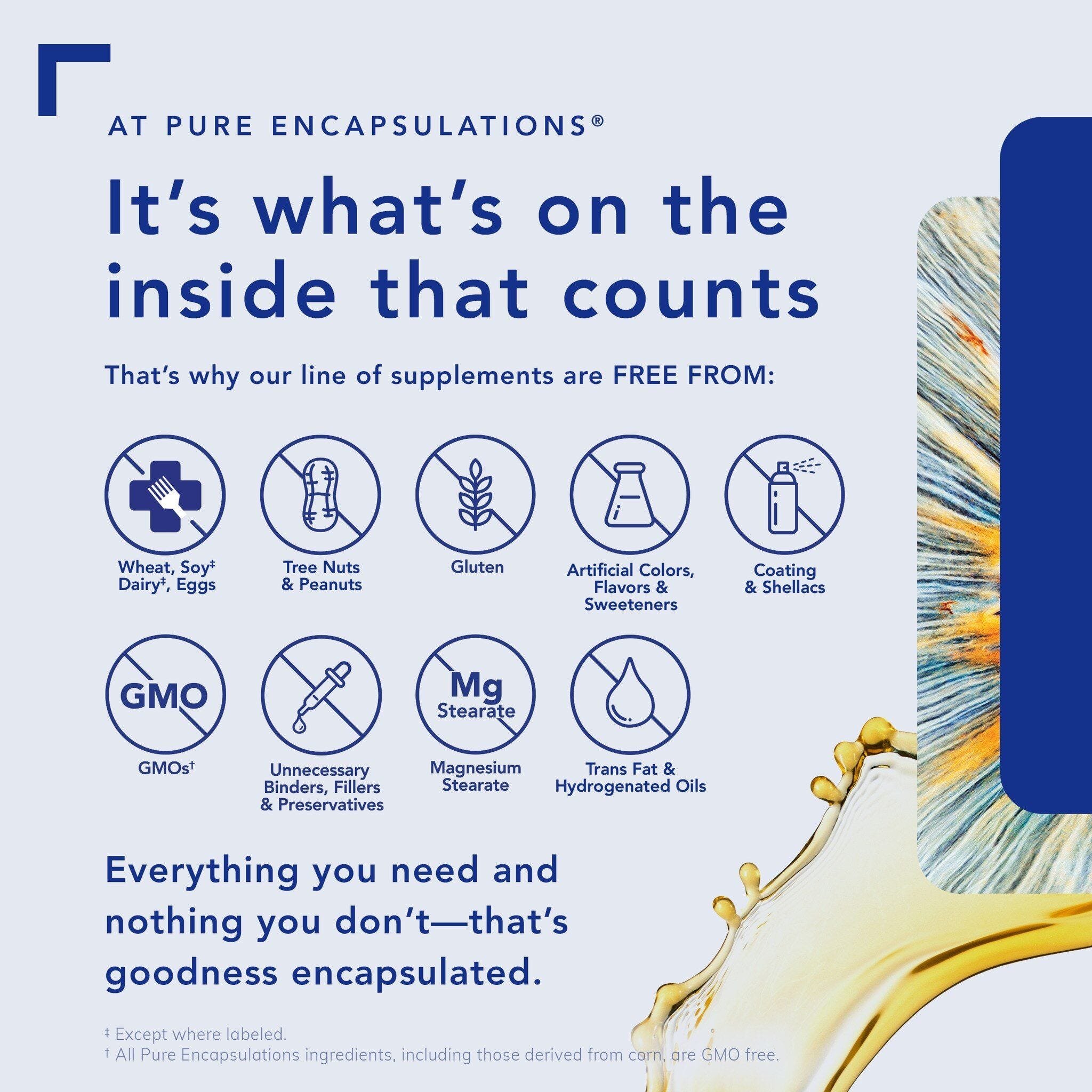
Free from artificial colors and sweeteners
Free from unnecessary binders, fillers and preservatives
Free from magnesium stearate
Ingredients
Each vegan capsule provides:
Taurine — 1,000 mg
Other ingredients include a vegetarian capsule made from cellulose and water, hypoallergenic plant fiber and ascorbyl palmitate.
Suggested Use
Take one capsule one to four times daily between meals.
Because the full suggested range provides between 1,000 and 4,000 mg of taurine daily, begin with the lowest serving appropriate for your goals unless directed otherwise by a qualified healthcare professional.
Taurine may be taken:
Between breakfast and lunch
Between lunch and dinner
Before exercise
After exercise
At another consistent time between meals
Do not exceed the suggested use.
Frequently Asked Questions
What is Pure Encapsulations Taurine?
Pure Encapsulations Taurine is a high-potency vegan supplement providing 1,000 mg of taurine per capsule.
It supports cardiovascular function, cellular hydration, muscle and nervous-system health, bile-acid formation, fat metabolism and healthy aging.
How much taurine is in each capsule?
Each capsule provides 1,000 mg of taurine.
How many capsules are in each bottle?
The Taurine 1,000 mg formula contains 120 vegan capsules per bottle.
How many capsules should I take?
Take one capsule one to four times daily between meals.
The most appropriate amount depends on your goals, health status, medications and professional guidance.
Should I begin with four capsules daily?
Not necessarily.
Four capsules represent the top of the suggested range and provide 4,000 mg of taurine. Many adults may prefer to begin with one capsule daily and increase only when appropriate.
Why should taurine be taken between meals?
Free-form amino compounds are often taken between meals to reduce competition with amino acids and nutrients from food.
Can I take taurine with food?
The suggested use is between meals.
Customers who experience digestive discomfort should seek individualized guidance before changing the directions.
What is the best time to take taurine?
Taurine can be taken at any consistent time between meals.
Some customers take it earlier in the day, while active adults may use it before or after exercise.
Can taurine be taken at night?
Yes. Taurine does not contain caffeine and can be taken later in the day.
Individual responses vary, so choose a time that fits your routine and does not interfere with sleep.
What does taurine do?
Taurine supports:
Heart function
Cell-membrane stability
Cellular hydration
Electrolyte balance
Muscle and nerve function
Bile-acid formation
Fat digestion
Liver and gallbladder wellness
Brain and eye health
Antioxidant defenses
Is taurine an amino acid?
Taurine is commonly described as an amino acid, but technically it is an amino sulfonic acid.
Unlike standard amino acids, it is not incorporated into proteins. It performs specialized cellular, neurological and metabolic functions.
Is taurine an essential amino acid?
Taurine is generally considered conditionally essential rather than essential for most healthy adults.
The body can produce it from cysteine and methionine, although dietary intake and production vary.
What foods contain taurine?
Taurine is naturally found primarily in:
Fish
Shellfish
Meat
Poultry
Dairy products
Plant foods generally contain very little taurine.
Is taurine a stimulant?
No. Taurine is not a conventional stimulant.
It does not act like caffeine, nicotine or stimulant-based pre-workout ingredients.
Does taurine contain caffeine?
No. Pure Encapsulations Taurine is caffeine-free.
Why is taurine used in energy drinks?
Taurine is added to some energy drinks for its roles in cellular and muscular function.
The immediate stimulating effect of energy drinks primarily comes from caffeine, not taurine.
Will taurine give me immediate energy?
Taurine does not generally produce an immediate energy surge.
It supports normal cellular, muscular and cardiovascular function rather than stimulating the central nervous system.
Does taurine support heart health?
Yes. Taurine supports healthy heart-muscle function, cell-membrane stability, electrolyte movement and cardiovascular wellness.
It is not a treatment for heart disease or abnormal heart rhythm.
Can taurine lower blood pressure?
Taurine may influence cardiovascular and vascular function, but it should not be used as a blood-pressure medication.
Customers with low blood pressure or those using antihypertensive medication should consult a healthcare professional before use.
Does taurine support circulation?
Taurine supports vascular and cardiovascular function, which contributes to healthy circulation.
It does not replace exercise, blood-pressure management or prescribed cardiovascular treatment.
Does taurine support exercise performance?
Taurine supports muscle-cell hydration, calcium handling, electrolyte balance and normal muscular function.
These roles make it relevant to exercise-performance and recovery routines.
Should I take taurine before a workout?
Taurine may be taken before exercise as part of an active-lifestyle routine.
Because it is not a stimulant, it should not be expected to create an immediate pre-workout energy effect.
Can I take taurine after a workout?
Yes. Taurine can be taken after exercise to complement hydration, nutrition and recovery practices.
Does taurine help muscle recovery?
Taurine supports normal muscle-cell function, cellular hydration and antioxidant defenses.
It should be combined with complete protein, carbohydrates when appropriate, hydration and quality sleep.
Does taurine build muscle?
Taurine is not a complete protein and does not directly stimulate muscle growth in the same way as resistance training and adequate essential amino acids.
It may support the cellular environment involved in muscular function and exercise.
Can taurine replace protein powder?
No.
Taurine does not provide the complete essential amino acids needed for muscle-protein synthesis.
Can I take taurine with creatine?
Yes. Taurine and creatine support different aspects of exercise and cellular performance.
Creatine supports rapid ATP regeneration, while taurine supports cellular hydration, membrane stability and normal muscle function.
Can I take taurine with Klean Protein?
Yes. Klean Protein supplies complete protein for muscle repair, while taurine provides targeted cellular and exercise support.
Because taurine is suggested between meals, it may be preferable to take it separately from a protein shake.
Can I take taurine with Klean Collagen+C?
Yes. Collagen supports connective tissues, while taurine supports cellular, cardiovascular and muscular function.
Can I take taurine with Electrolyte/Energy Formula?
Yes. Taurine can complement an electrolyte product during demanding exercise.
The electrolyte formula provides fluids, minerals and carbohydrates, while taurine supports cellular hydration and normal muscle function.
Does taurine support hydration?
Taurine functions as an osmolyte and helps cells regulate fluid balance.
It does not replace drinking water or replenishing electrolytes lost through sweat.
Can I take taurine before or after a sauna?
Taurine may be included in a broader wellness routine, but it does not prevent dehydration or heat illness.
Drink adequate fluids, replace electrolytes when needed and do not use supplements to extend sauna exposure beyond safe limits.
Does taurine support brain health?
Yes. Taurine is abundant in the brain and nervous system and supports cell-membrane stability, neurological signaling and cellular protection.
It is not a treatment for memory loss, depression or neurological disease.
Does taurine help with stress or sleep?
Taurine contributes to balanced nervous-system activity, but it is not primarily positioned as a sleep or stress supplement.
For targeted relaxation support, products such as L-Theanine, Magnesium Glycinate or Cortisol Calm may be more appropriate.
Does taurine support eye health?
Yes. Taurine is concentrated in retinal tissue and contributes to normal retinal-cell function and protection.
It does not treat eye disease or restore lost vision.
Does taurine support digestion?
Taurine contributes to bile-acid formation, which supports the digestion and absorption of dietary fats.
It is not a digestive enzyme, probiotic or treatment for gastrointestinal disease.
Does taurine support the gallbladder?
Taurine supports the formation of bile salts used in normal fat digestion and absorption.
Customers with gallstones, bile-duct obstruction or gallbladder disease should consult a healthcare professional before using supplements for bile support.
Does taurine support liver health?
Taurine contributes to bile formation, normal detoxification processes and healthy hepatic lipid metabolism.
It should not replace medical evaluation or treatment for liver disease.
Is taurine a detox supplement?
Taurine supports normal liver chemistry, bile formation and cellular antioxidant processes.
It should not be represented as a cleanse or a way to remove all toxins from the body.
Does taurine help with fat loss?
Taurine is not a fat burner or appetite suppressant.
Although it participates in bile and lipid metabolism, meaningful fat loss requires appropriate nutrition, calorie control and physical activity.
Does taurine support healthy aging?
Yes. Taurine supports several systems relevant to healthy aging, including cardiovascular, muscular, neurological, metabolic and eye health.
Research into taurine and human longevity is still developing, and taurine should not be represented as extending lifespan.
Can I take taurine every day?
Yes. It is formulated for daily use when taken according to the label and individual needs.
Long-term use should be reviewed professionally when health conditions or medications are involved.
How long does taurine take to work?
Taurine is nutritional support rather than a fast-acting medication.
Results depend on baseline status, diet, serving size, consistency and the area of wellness being supported.
Can I take taurine with O.N.E. Multivitamin?
Yes. O.N.E. Multivitamin provides foundational vitamins, minerals and antioxidants, while taurine provides targeted cellular and cardiovascular support.
Can I take taurine with O.N.E. Omega?
Yes. Taurine and omega-3 fatty acids can complement one another within cardiovascular and healthy-aging routines.
Can I take taurine with Ubiquinol-QH?
Yes. Ubiquinol supports mitochondrial energy and cardiovascular wellness, while taurine supports heart-muscle function, membranes and electrolyte balance.
Can I take taurine with Magnesium Glycinate?
Yes. Taurine and magnesium both support muscle, nerve and cardiovascular function through different biological pathways.
Can I take taurine with NAC + Glycine?
Yes. NAC + Glycine supports glutathione production and antioxidant defenses, while taurine supports cardiovascular, cellular and bile-related functions.
Can I take taurine with Berberine UltraSorb?
The two supplements may be included in the same metabolic-health routine.
Customers using blood-glucose, blood-pressure or cardiovascular medications should have the combination reviewed professionally.
Is Pure Encapsulations Taurine vegan?
Yes. The taurine is synthetically produced, and the capsule is plant-based.
Is it vegetarian?
Yes. It is suitable for vegetarian diets.
Is Taurine gluten-free?
Yes. It is gluten-free.
Is Taurine non-GMO?
Yes. It is GMO-free.
Does it contain dairy or soy?
The formula is free from dairy and soy.
Customers with severe allergies should review the current physical label before use.
Does Taurine contain artificial colors or sweeteners?
No. It is free from artificial colors and sweeteners.
Does Taurine contain magnesium stearate?
No. Magnesium stearate is not included in the formula.
Can taurine cause side effects?
Taurine is generally well tolerated when used appropriately.
Possible side effects may include:
Nausea
Digestive discomfort
Headache
Dizziness
Changes in blood pressure
Loose stools at higher amounts
Discontinue use and seek guidance if significant or persistent symptoms occur.
Can taurine interact with medication?
Taurine may influence cardiovascular, fluid-balance or metabolic processes.
Customers taking blood-pressure medication, diuretics, lithium or medication for a heart or metabolic condition should consult their prescriber or pharmacist before use.
Can people with low blood pressure take taurine?
Taurine may affect vascular function.
Customers with naturally low blood pressure, dizziness or blood-pressure medication should obtain professional guidance before use.
Can people with kidney disease take taurine?
Customers with kidney disease, reduced kidney function or medically managed fluid and electrolyte restrictions should consult their healthcare professional before using amino-acid supplements.
Can people with liver disease take taurine?
Customers with liver disease, gallbladder disease or abnormal liver tests should obtain professional guidance before use.
Can pregnant customers take Taurine?
Pregnant customers should consult their healthcare professional before using a concentrated taurine supplement.
Can nursing customers take Taurine?
Breastfeeding customers should obtain professional guidance before use.
Can children take Pure Encapsulations Taurine?
The product is intended for adults ages 18 and older.
A pediatrician should determine whether taurine supplementation is appropriate for a child or teenager.
Who should consult a healthcare professional before use?
Professional guidance is especially important for customers who:
Are pregnant or nursing
Take prescription medication
Use blood-pressure medication
Take diuretics or lithium
Have heart disease
Have kidney or liver disease
Have gallbladder or bile-duct problems
Have low blood pressure
Have a medically managed electrolyte disorder
Are under 18 years old
How should Pure Encapsulations Taurine be stored?
Store the bottle tightly closed in a cool, dry place away from direct sunlight, excessive heat and moisture.
Keep it out of reach of children.
Cellular, Cardiovascular and Exercise Support for Healthy Aging
Support cardiovascular function, cellular hydration and long-term physical resilience with Pure Encapsulations Taurine 1,000 mg.
Each vegan capsule provides 1,000 mg of taurine, a sulfur-containing amino compound naturally concentrated in metabolically active tissues such as the heart, brain, muscles, eyes and nervous system.
Taurine plays several important roles throughout the body. It helps stabilize cell membranes, supports the movement of electrolytes into and out of cells, contributes to healthy heart-muscle function and participates in the formation of bile acids needed for normal fat digestion and absorption.
Taurine is also involved in cellular hydration, antioxidant defenses, nervous-system function and exercise physiology. These wide-ranging roles make it a valuable addition to healthy-aging and active-lifestyle routines.
Pure Encapsulations Taurine provides a clean, high-potency formula without caffeine, sugar, flavors or unnecessary active ingredients.
Benefits of Taurine
Taurine supports:
Cardiovascular function
Healthy heart-muscle contractility
Cellular hydration and electrolyte balance
Normal muscle and nervous-system function
Cell-membrane stability
Healthy bile-acid formation
Digestion and absorption of dietary fats
Gallbladder and liver wellness
Healthy hepatic lipid metabolism
Normal detoxification processes
Brain and neurological health
Eye and retinal wellness
Exercise performance and recovery
Antioxidant defenses
Long-term healthy-aging goals
What Is Taurine?
Taurine is a naturally occurring sulfur-containing amino compound found throughout the body.
Although it is commonly referred to as an amino acid, taurine is not used to build proteins in the same way as essential amino acids such as lysine, leucine or valine. Instead, it remains available in tissues where it performs specialized cellular and metabolic functions.
Taurine is especially concentrated in:
Heart tissue
Skeletal muscle
The brain
The nervous system
The retina
Blood cells
Other electrically active tissues
The body can produce taurine from the sulfur-containing amino acids cysteine and methionine. Taurine is also obtained through foods, particularly meat, fish and seafood.
Individual taurine status can be influenced by diet, age, metabolism and health conditions.
1,000 mg of Taurine per Capsule
Each vegan capsule provides:
Taurine — 1,000 mg
The taurine is synthetically produced, providing a consistent vegan source without animal-derived taurine.
The 1,000 mg formula offers a convenient high-potency option for adults who do not want to take several lower-strength capsules.
Taurine for Cardiovascular Health
The heart is one of the body’s most metabolically active organs and contains a significant concentration of taurine.
Taurine helps support cardiovascular wellness through several complementary roles, including:
Cell-membrane stabilization
Electrolyte movement across heart-muscle cells
Normal calcium signaling
Healthy heart-muscle contraction
Vascular function
Antioxidant protection
Normal fluid balance
Taurine can complement a heart-healthy lifestyle that includes:
Regular cardiovascular exercise
Resistance training
A nutrient-dense diet
Healthy blood-pressure management
Appropriate cholesterol monitoring
Healthy glucose regulation
Quality sleep
Avoiding tobacco
Taurine is not a cardiovascular medication and should not replace prescribed treatment for high blood pressure, heart failure, abnormal heart rhythm or another heart condition.
Cellular Hydration and Electrolyte Balance
Taurine functions as an osmolyte—a compound that helps cells regulate their internal fluid balance.
Maintaining proper cellular hydration is essential for:
Cell volume
Membrane stability
Muscle function
Nerve signaling
Electrolyte balance
Adaptation to physical stress
Taurine also supports the normal movement of sodium, potassium, calcium and magnesium across cell membranes.
These functions make taurine relevant to active adults, athletes and anyone focused on maintaining muscular and neurological performance over time.
Taurine is not a replacement for water or electrolyte intake. During exercise, heat exposure or heavy sweating, adequate fluids and dietary electrolytes remain essential.
Taurine for Muscle Function and Exercise
Taurine is naturally concentrated in skeletal muscle, where it contributes to cellular hydration, calcium handling and normal muscle contraction.
It may complement exercise routines focused on:
Muscular endurance
Training capacity
Repeated physical effort
Exercise recovery
Cellular hydration
Healthy muscle function
Long-term physical performance
Taurine is especially relevant for:
Strength training
Running
Cycling
High-intensity interval training
Dance
Recreational sports
Long-duration physical activity
Active-aging programs
Taurine is not a stimulant and does not provide an immediate caffeine-like surge. Its value comes from supporting normal cellular and muscular function.
Taurine and Exercise Recovery
Intense physical activity increases demands on muscle cells, hydration systems and antioxidant defenses.
Taurine can complement a complete recovery routine by supporting:
Normal muscle-cell function
Cellular fluid balance
Electrolyte movement
Antioxidant activity
Healthy responses to physical stress
Continued exercise performance
For comprehensive recovery, combine taurine with:
Adequate dietary protein
Creatine monohydrate
Proper hydration
Electrolytes when needed
Sufficient carbohydrates
Magnesium
Quality sleep
Appropriate rest between workouts
Taurine should not be used to mask an injury, severe muscle pain or persistent weakness.
Taurine for Brain and Nervous-System Health
Taurine is abundant in the brain and nervous system, where it contributes to cell-membrane stability, electrolyte regulation and normal neurological signaling.
It also participates in inhibitory signaling and helps maintain balanced nervous-system activity.
Taurine may support:
Healthy neuronal function
Normal nerve signaling
Cellular protection
Mental and neurological wellness
A balanced response to cellular stress
Taurine is not a sedative, antidepressant or treatment for neurological disease.
Taurine for Eye and Retinal Health
The retina contains a high concentration of taurine.
Taurine contributes to the normal structure, function and protection of retinal cells, making it relevant to long-term visual wellness.
A complete eye-health routine should also include:
Regular comprehensive eye examinations
Blood-glucose and blood-pressure management
Protection from excessive ultraviolet exposure
Adequate intake of lutein, zeaxanthin and omega-3 fatty acids
Avoiding tobacco
Taurine does not treat vision loss or retinal disease. Sudden or progressive changes in vision require prompt professional evaluation.
Bile Formation and Fat Digestion
Taurine combines with bile acids to form compounds such as taurocholate.
Bile acids help the digestive system emulsify fats so they can be properly digested and absorbed. This process also supports the absorption of fat-soluble nutrients, including vitamins A, D, E and K.
Taurine therefore contributes to:
Normal bile-acid formation
Digestion of dietary fats
Absorption of fat-soluble vitamins
Gallbladder function
Hepatic lipid metabolism
It is not a digestive enzyme or treatment for gallstones, bile-duct obstruction or gallbladder disease.
Liver and Detoxification Support
The liver continuously processes nutrients, hormones, medications and metabolic byproducts.
Taurine contributes to normal liver chemistry, bile formation and lipid metabolism. It also supports antioxidant defenses that help protect cells during normal metabolic activity.
Taurine may complement a liver-wellness routine that includes:
Limiting excessive alcohol
Maintaining a healthy body composition
Consuming adequate protein and fiber
Managing blood glucose and triglycerides
Staying physically active
Avoiding unnecessary exposure to toxins
Following appropriate medical care
Taurine is not a detox cleanse and should not replace evaluation or treatment for liver disease.
Taurine and Healthy Aging
Taurine has attracted growing interest within healthy-aging research because levels and metabolism can change across the lifespan.
Its known physiological roles make it relevant to several foundations of longevity, including:
Cardiovascular function
Muscle health
Cellular hydration
Nervous-system wellness
Mitochondrial and metabolic function
Antioxidant protection
Eye health
Bile and liver function
Research into taurine supplementation and human longevity is still developing. Taurine should not be represented as extending lifespan or preventing age-related disease.
Its strongest position is as a nutrient that supports systems associated with long-term health, physical function and resilience.
Taurine and Metabolic Wellness
Taurine participates in cellular signaling, lipid metabolism and normal energy regulation.
It may complement a metabolic-health routine focused on:
Healthy glucose metabolism
Lipid balance
Cellular energy
Cardiovascular wellness
Healthy body composition
Regular physical activity
Taurine is not a weight-loss supplement, appetite suppressant or blood-glucose medication.
Is Taurine an Energy-Drink Ingredient?
Taurine is commonly added to energy drinks, but taurine itself is not caffeine and is not a conventional stimulant.
The stimulating effects of most energy drinks primarily come from caffeine and sometimes other stimulant ingredients—not taurine.
Pure Encapsulations Taurine contains:
No caffeine
No sugar
No artificial energy blend
No stimulant ingredients
No flavored drink mix
It provides taurine in a straightforward capsule without the additional ingredients found in energy drinks.
Taurine for Vegan and Vegetarian Diets
Taurine occurs naturally in animal-derived foods, especially meat, fish and seafood. Plant foods generally contain little taurine.
The body can produce taurine internally, so it is not classified as an essential nutrient for most healthy adults. However, people who avoid animal foods may consume less preformed taurine through their diet.
Pure Encapsulations Taurine is synthetically produced and suitable for vegan and vegetarian lifestyles.
Product Highlights
1,000 mg of taurine per capsule
120 capsules per bottle
Supports cardiovascular function
Supports healthy heart-muscle contractility
Supports cellular hydration
Supports electrolyte movement across cell membranes
Supports normal muscle and nervous-system function
Supports bile formation and fat digestion
Supports gallbladder and liver wellness
Supports healthy hepatic lipid metabolism
Supports antioxidant defenses
Supports brain and retinal health
Supports exercise performance and recovery
Caffeine-free
Stimulant-free
Synthetically produced taurine
Vegan
Vegetarian
Gluten-free
GMO-free
Free from artificial colors and sweeteners
Free from unnecessary binders, fillers and preservatives
Free from magnesium stearate
Ingredients
Each vegan capsule provides:
Taurine — 1,000 mg
Other ingredients include a vegetarian capsule made from cellulose and water, hypoallergenic plant fiber and ascorbyl palmitate.
Suggested Use
Take one capsule one to four times daily between meals.
Because the full suggested range provides between 1,000 and 4,000 mg of taurine daily, begin with the lowest serving appropriate for your goals unless directed otherwise by a qualified healthcare professional.
Taurine may be taken:
Between breakfast and lunch
Between lunch and dinner
Before exercise
After exercise
At another consistent time between meals
Do not exceed the suggested use.
Frequently Asked Questions
What is Pure Encapsulations Taurine?
Pure Encapsulations Taurine is a high-potency vegan supplement providing 1,000 mg of taurine per capsule.
It supports cardiovascular function, cellular hydration, muscle and nervous-system health, bile-acid formation, fat metabolism and healthy aging.
How much taurine is in each capsule?
Each capsule provides 1,000 mg of taurine.
How many capsules are in each bottle?
The Taurine 1,000 mg formula contains 120 vegan capsules per bottle.
How many capsules should I take?
Take one capsule one to four times daily between meals.
The most appropriate amount depends on your goals, health status, medications and professional guidance.
Should I begin with four capsules daily?
Not necessarily.
Four capsules represent the top of the suggested range and provide 4,000 mg of taurine. Many adults may prefer to begin with one capsule daily and increase only when appropriate.
Why should taurine be taken between meals?
Free-form amino compounds are often taken between meals to reduce competition with amino acids and nutrients from food.
Can I take taurine with food?
The suggested use is between meals.
Customers who experience digestive discomfort should seek individualized guidance before changing the directions.
What is the best time to take taurine?
Taurine can be taken at any consistent time between meals.
Some customers take it earlier in the day, while active adults may use it before or after exercise.
Can taurine be taken at night?
Yes. Taurine does not contain caffeine and can be taken later in the day.
Individual responses vary, so choose a time that fits your routine and does not interfere with sleep.
What does taurine do?
Taurine supports:
Heart function
Cell-membrane stability
Cellular hydration
Electrolyte balance
Muscle and nerve function
Bile-acid formation
Fat digestion
Liver and gallbladder wellness
Brain and eye health
Antioxidant defenses
Is taurine an amino acid?
Taurine is commonly described as an amino acid, but technically it is an amino sulfonic acid.
Unlike standard amino acids, it is not incorporated into proteins. It performs specialized cellular, neurological and metabolic functions.
Is taurine an essential amino acid?
Taurine is generally considered conditionally essential rather than essential for most healthy adults.
The body can produce it from cysteine and methionine, although dietary intake and production vary.
What foods contain taurine?
Taurine is naturally found primarily in:
Fish
Shellfish
Meat
Poultry
Dairy products
Plant foods generally contain very little taurine.
Is taurine a stimulant?
No. Taurine is not a conventional stimulant.
It does not act like caffeine, nicotine or stimulant-based pre-workout ingredients.
Does taurine contain caffeine?
No. Pure Encapsulations Taurine is caffeine-free.
Why is taurine used in energy drinks?
Taurine is added to some energy drinks for its roles in cellular and muscular function.
The immediate stimulating effect of energy drinks primarily comes from caffeine, not taurine.
Will taurine give me immediate energy?
Taurine does not generally produce an immediate energy surge.
It supports normal cellular, muscular and cardiovascular function rather than stimulating the central nervous system.
Does taurine support heart health?
Yes. Taurine supports healthy heart-muscle function, cell-membrane stability, electrolyte movement and cardiovascular wellness.
It is not a treatment for heart disease or abnormal heart rhythm.
Can taurine lower blood pressure?
Taurine may influence cardiovascular and vascular function, but it should not be used as a blood-pressure medication.
Customers with low blood pressure or those using antihypertensive medication should consult a healthcare professional before use.
Does taurine support circulation?
Taurine supports vascular and cardiovascular function, which contributes to healthy circulation.
It does not replace exercise, blood-pressure management or prescribed cardiovascular treatment.
Does taurine support exercise performance?
Taurine supports muscle-cell hydration, calcium handling, electrolyte balance and normal muscular function.
These roles make it relevant to exercise-performance and recovery routines.
Should I take taurine before a workout?
Taurine may be taken before exercise as part of an active-lifestyle routine.
Because it is not a stimulant, it should not be expected to create an immediate pre-workout energy effect.
Can I take taurine after a workout?
Yes. Taurine can be taken after exercise to complement hydration, nutrition and recovery practices.
Does taurine help muscle recovery?
Taurine supports normal muscle-cell function, cellular hydration and antioxidant defenses.
It should be combined with complete protein, carbohydrates when appropriate, hydration and quality sleep.
Does taurine build muscle?
Taurine is not a complete protein and does not directly stimulate muscle growth in the same way as resistance training and adequate essential amino acids.
It may support the cellular environment involved in muscular function and exercise.
Can taurine replace protein powder?
No.
Taurine does not provide the complete essential amino acids needed for muscle-protein synthesis.
Can I take taurine with creatine?
Yes. Taurine and creatine support different aspects of exercise and cellular performance.
Creatine supports rapid ATP regeneration, while taurine supports cellular hydration, membrane stability and normal muscle function.
Can I take taurine with Klean Protein?
Yes. Klean Protein supplies complete protein for muscle repair, while taurine provides targeted cellular and exercise support.
Because taurine is suggested between meals, it may be preferable to take it separately from a protein shake.
Can I take taurine with Klean Collagen+C?
Yes. Collagen supports connective tissues, while taurine supports cellular, cardiovascular and muscular function.
Can I take taurine with Electrolyte/Energy Formula?
Yes. Taurine can complement an electrolyte product during demanding exercise.
The electrolyte formula provides fluids, minerals and carbohydrates, while taurine supports cellular hydration and normal muscle function.
Does taurine support hydration?
Taurine functions as an osmolyte and helps cells regulate fluid balance.
It does not replace drinking water or replenishing electrolytes lost through sweat.
Can I take taurine before or after a sauna?
Taurine may be included in a broader wellness routine, but it does not prevent dehydration or heat illness.
Drink adequate fluids, replace electrolytes when needed and do not use supplements to extend sauna exposure beyond safe limits.
Does taurine support brain health?
Yes. Taurine is abundant in the brain and nervous system and supports cell-membrane stability, neurological signaling and cellular protection.
It is not a treatment for memory loss, depression or neurological disease.
Does taurine help with stress or sleep?
Taurine contributes to balanced nervous-system activity, but it is not primarily positioned as a sleep or stress supplement.
For targeted relaxation support, products such as L-Theanine, Magnesium Glycinate or Cortisol Calm may be more appropriate.
Does taurine support eye health?
Yes. Taurine is concentrated in retinal tissue and contributes to normal retinal-cell function and protection.
It does not treat eye disease or restore lost vision.
Does taurine support digestion?
Taurine contributes to bile-acid formation, which supports the digestion and absorption of dietary fats.
It is not a digestive enzyme, probiotic or treatment for gastrointestinal disease.
Does taurine support the gallbladder?
Taurine supports the formation of bile salts used in normal fat digestion and absorption.
Customers with gallstones, bile-duct obstruction or gallbladder disease should consult a healthcare professional before using supplements for bile support.
Does taurine support liver health?
Taurine contributes to bile formation, normal detoxification processes and healthy hepatic lipid metabolism.
It should not replace medical evaluation or treatment for liver disease.
Is taurine a detox supplement?
Taurine supports normal liver chemistry, bile formation and cellular antioxidant processes.
It should not be represented as a cleanse or a way to remove all toxins from the body.
Does taurine help with fat loss?
Taurine is not a fat burner or appetite suppressant.
Although it participates in bile and lipid metabolism, meaningful fat loss requires appropriate nutrition, calorie control and physical activity.
Does taurine support healthy aging?
Yes. Taurine supports several systems relevant to healthy aging, including cardiovascular, muscular, neurological, metabolic and eye health.
Research into taurine and human longevity is still developing, and taurine should not be represented as extending lifespan.
Can I take taurine every day?
Yes. It is formulated for daily use when taken according to the label and individual needs.
Long-term use should be reviewed professionally when health conditions or medications are involved.
How long does taurine take to work?
Taurine is nutritional support rather than a fast-acting medication.
Results depend on baseline status, diet, serving size, consistency and the area of wellness being supported.
Can I take taurine with O.N.E. Multivitamin?
Yes. O.N.E. Multivitamin provides foundational vitamins, minerals and antioxidants, while taurine provides targeted cellular and cardiovascular support.
Can I take taurine with O.N.E. Omega?
Yes. Taurine and omega-3 fatty acids can complement one another within cardiovascular and healthy-aging routines.
Can I take taurine with Ubiquinol-QH?
Yes. Ubiquinol supports mitochondrial energy and cardiovascular wellness, while taurine supports heart-muscle function, membranes and electrolyte balance.
Can I take taurine with Magnesium Glycinate?
Yes. Taurine and magnesium both support muscle, nerve and cardiovascular function through different biological pathways.
Can I take taurine with NAC + Glycine?
Yes. NAC + Glycine supports glutathione production and antioxidant defenses, while taurine supports cardiovascular, cellular and bile-related functions.
Can I take taurine with Berberine UltraSorb?
The two supplements may be included in the same metabolic-health routine.
Customers using blood-glucose, blood-pressure or cardiovascular medications should have the combination reviewed professionally.
Is Pure Encapsulations Taurine vegan?
Yes. The taurine is synthetically produced, and the capsule is plant-based.
Is it vegetarian?
Yes. It is suitable for vegetarian diets.
Is Taurine gluten-free?
Yes. It is gluten-free.
Is Taurine non-GMO?
Yes. It is GMO-free.
Does it contain dairy or soy?
The formula is free from dairy and soy.
Customers with severe allergies should review the current physical label before use.
Does Taurine contain artificial colors or sweeteners?
No. It is free from artificial colors and sweeteners.
Does Taurine contain magnesium stearate?
No. Magnesium stearate is not included in the formula.
Can taurine cause side effects?
Taurine is generally well tolerated when used appropriately.
Possible side effects may include:
Nausea
Digestive discomfort
Headache
Dizziness
Changes in blood pressure
Loose stools at higher amounts
Discontinue use and seek guidance if significant or persistent symptoms occur.
Can taurine interact with medication?
Taurine may influence cardiovascular, fluid-balance or metabolic processes.
Customers taking blood-pressure medication, diuretics, lithium or medication for a heart or metabolic condition should consult their prescriber or pharmacist before use.
Can people with low blood pressure take taurine?
Taurine may affect vascular function.
Customers with naturally low blood pressure, dizziness or blood-pressure medication should obtain professional guidance before use.
Can people with kidney disease take taurine?
Customers with kidney disease, reduced kidney function or medically managed fluid and electrolyte restrictions should consult their healthcare professional before using amino-acid supplements.
Can people with liver disease take taurine?
Customers with liver disease, gallbladder disease or abnormal liver tests should obtain professional guidance before use.
Can pregnant customers take Taurine?
Pregnant customers should consult their healthcare professional before using a concentrated taurine supplement.
Can nursing customers take Taurine?
Breastfeeding customers should obtain professional guidance before use.
Can children take Pure Encapsulations Taurine?
The product is intended for adults ages 18 and older.
A pediatrician should determine whether taurine supplementation is appropriate for a child or teenager.
Who should consult a healthcare professional before use?
Professional guidance is especially important for customers who:
Are pregnant or nursing
Take prescription medication
Use blood-pressure medication
Take diuretics or lithium
Have heart disease
Have kidney or liver disease
Have gallbladder or bile-duct problems
Have low blood pressure
Have a medically managed electrolyte disorder
Are under 18 years old
How should Pure Encapsulations Taurine be stored?
Store the bottle tightly closed in a cool, dry place away from direct sunlight, excessive heat and moisture.
Keep it out of reach of children.